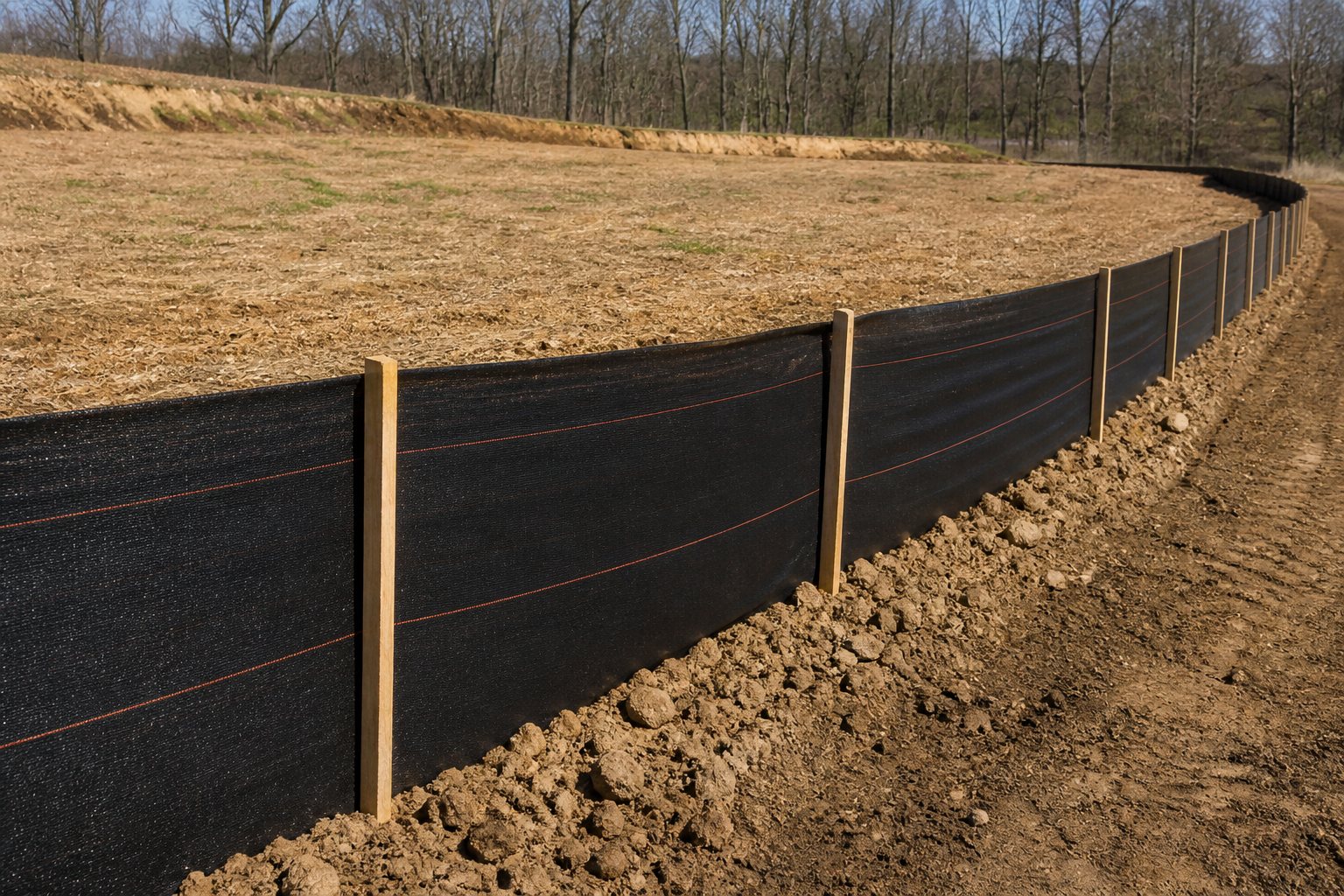
Silt Fence
Perimeter sediment control. Trenched 6 inches into the ground, backfilled and compacted, posts on the downhill side. Catches sediment from sheet flow before it leaves the site. Repaired or replaced when undermined or overtopped.
A plain-English reference on SWPPP requirements, common BMP types, and stormwater compliance basics in Kansas and Missouri — plus direct links to KDHE, Missouri DNR, and EPA NPDES Region 7. Not legal advice. Always consult your actual permit and your regulator for project-specific requirements.
A Stormwater Pollution Prevention Plan (SWPPP) is a site-specific written plan documenting how stormwater runoff, erosion, and sediment will be controlled on a construction site. It's required under the EPA's NPDES Construction General Permit for most construction projects disturbing one acre or more of land — and for smaller sites that are part of a larger common plan of development.
The SWPPP isn't a one-time document. It identifies the BMPs (Best Management Practices) that have to be installed, sets an inspection cadence, requires corrective action documentation, and is updated as site conditions change. It has to be kept on-site, accessible to regulators, and maintained from initial ground disturbance through final stabilization.
Best Management Practices (BMPs) are the physical controls a SWPPP requires to manage runoff, erosion, and sediment on a construction site. Below are the controls you'll most commonly see specified — installed correctly, maintained on schedule, and documented. Images are illustrative, not project photos.
Perimeter sediment control. Trenched 6 inches into the ground, backfilled and compacted, posts on the downhill side. Catches sediment from sheet flow before it leaves the site. Repaired or replaced when undermined or overtopped.
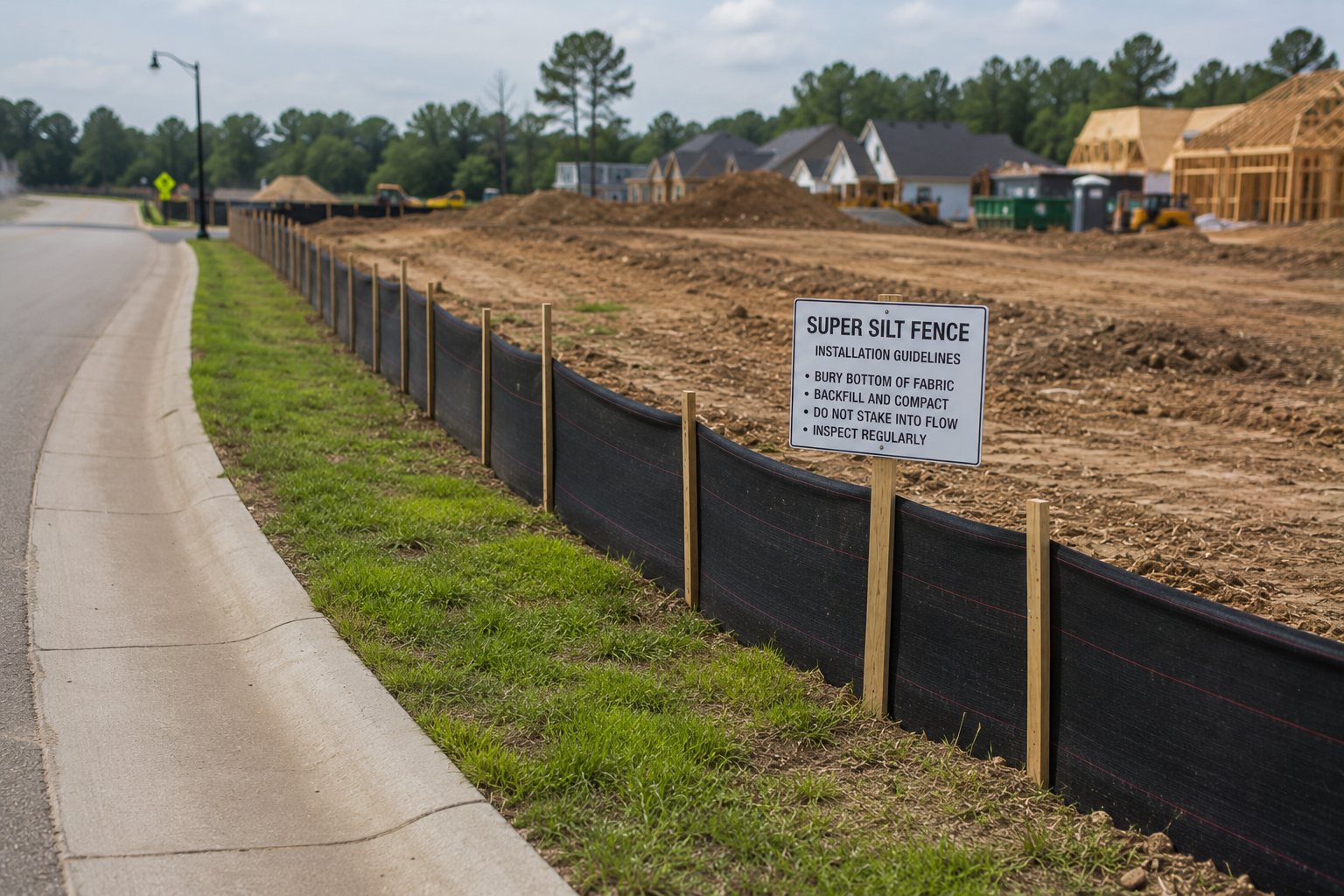
Reinforced silt fence with chain-link backing for higher-flow or steeper-slope conditions where standard fabric alone can't handle the load. Used where flow concentrates or slopes are too steep for standard silt fence to perform.
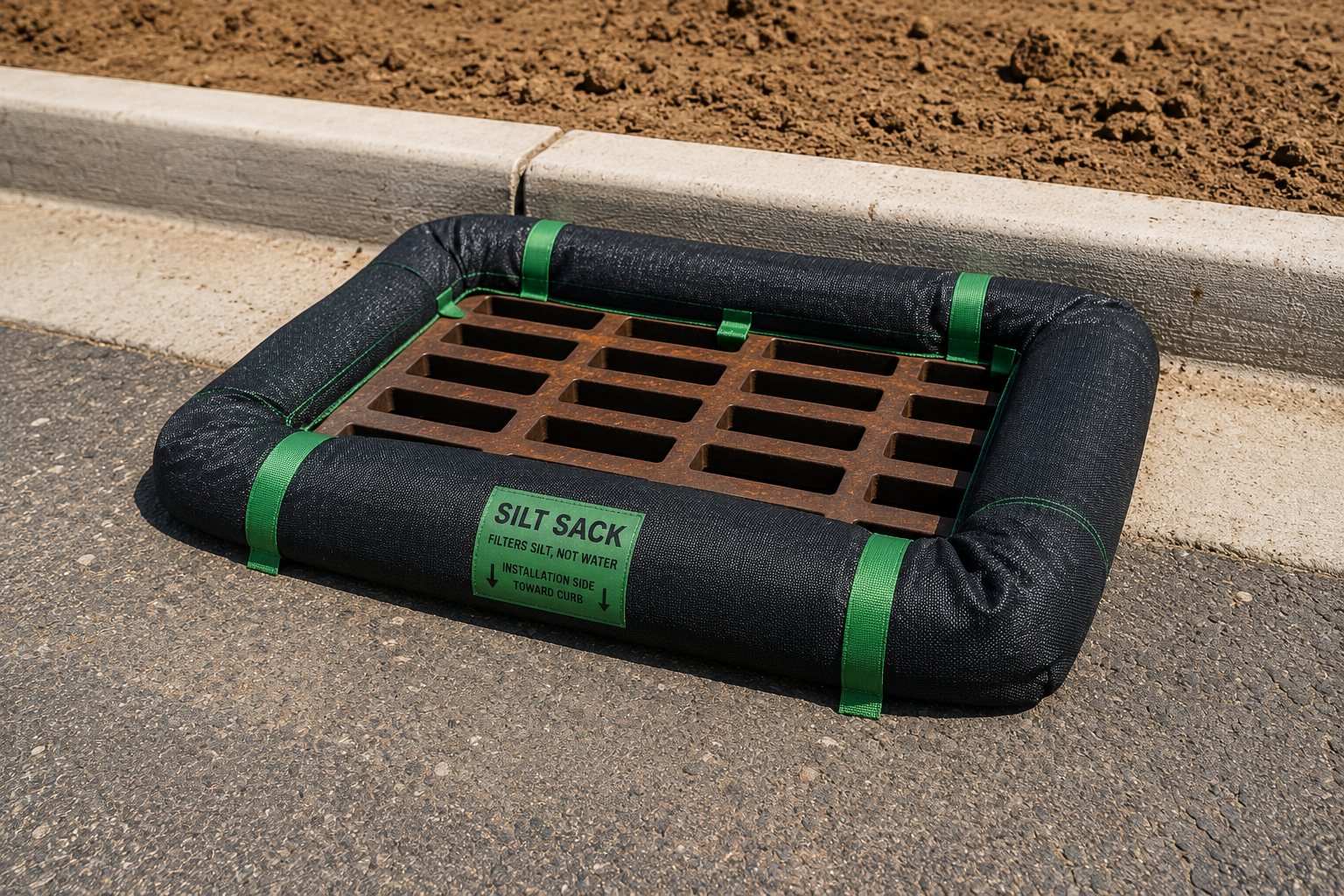
Filter fabric, gravel bags, or pre-fabricated inserts placed around or inside a storm drain inlet to capture sediment before it enters the storm system. Cleaned out before it gets overwhelmed — not after.
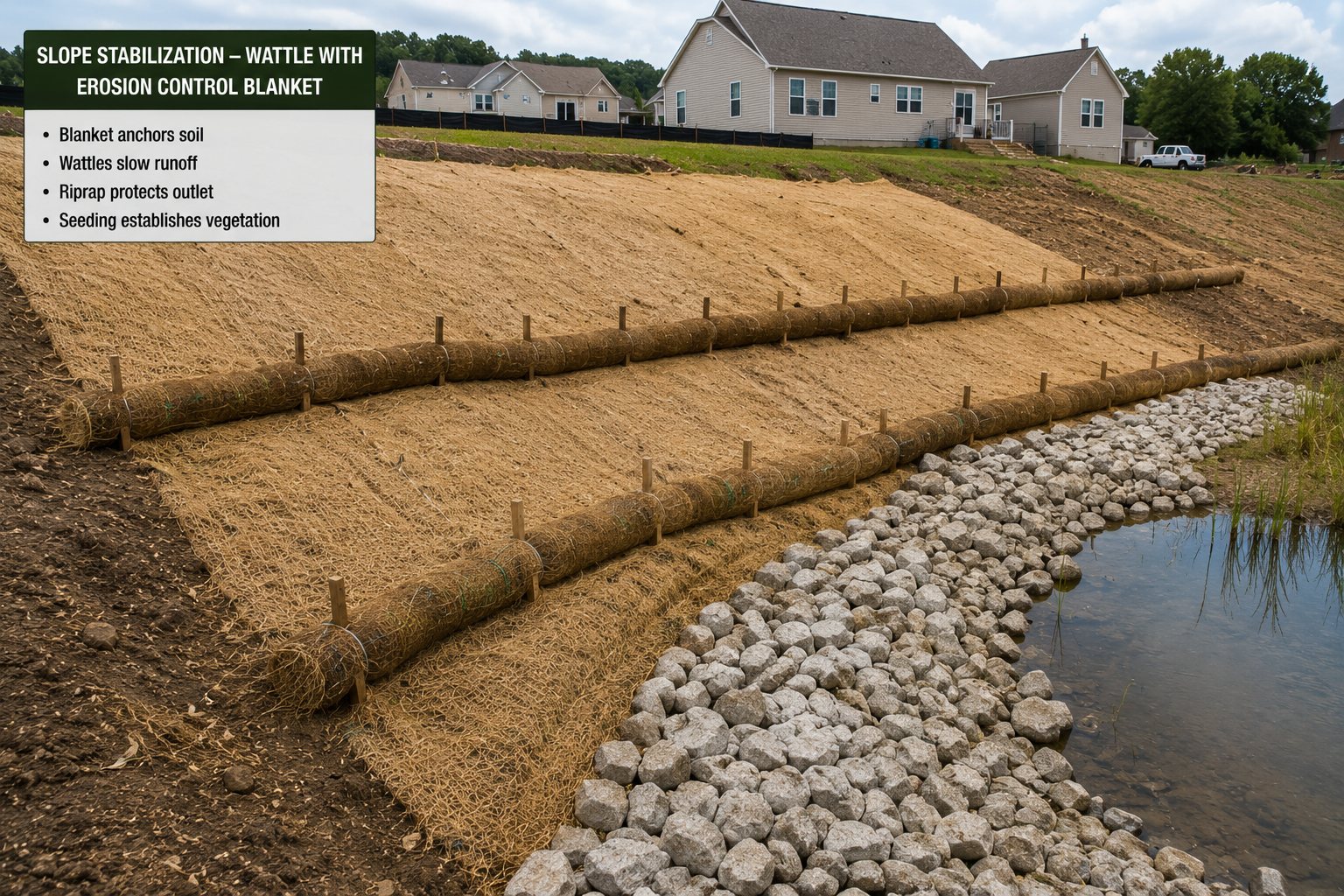
Disturbed slopes seeded, then covered with erosion control blanket or anchored straw to hold soil in place while vegetation establishes. The longer a slope sits unstabilized, the higher the chance the next rain undoes the grading.
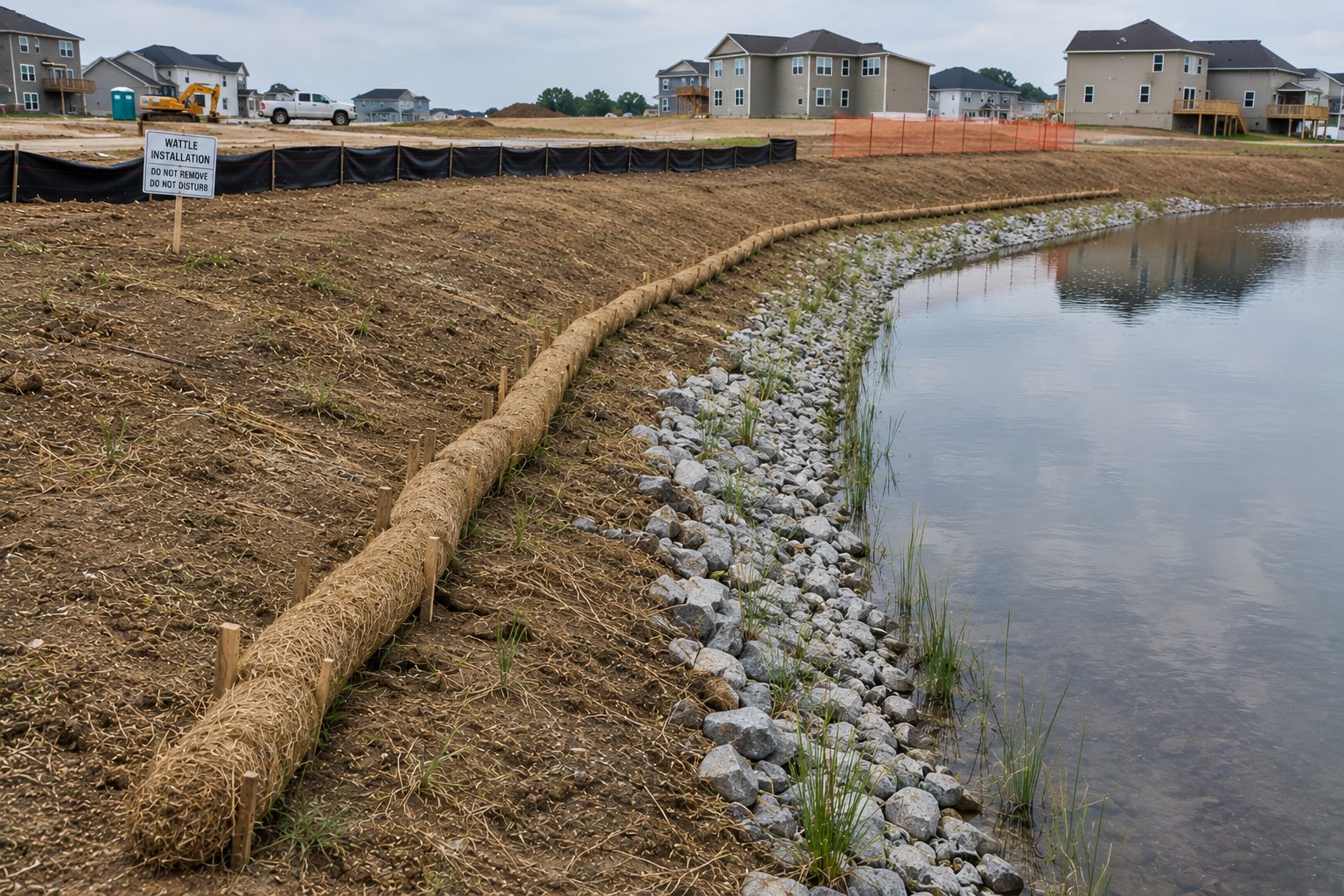
Lay-flat sediment control on slopes and around sensitive features like ponds. Slows runoff, captures fine sediment, and biodegrades. Used as a complement to silt fence — not a replacement.
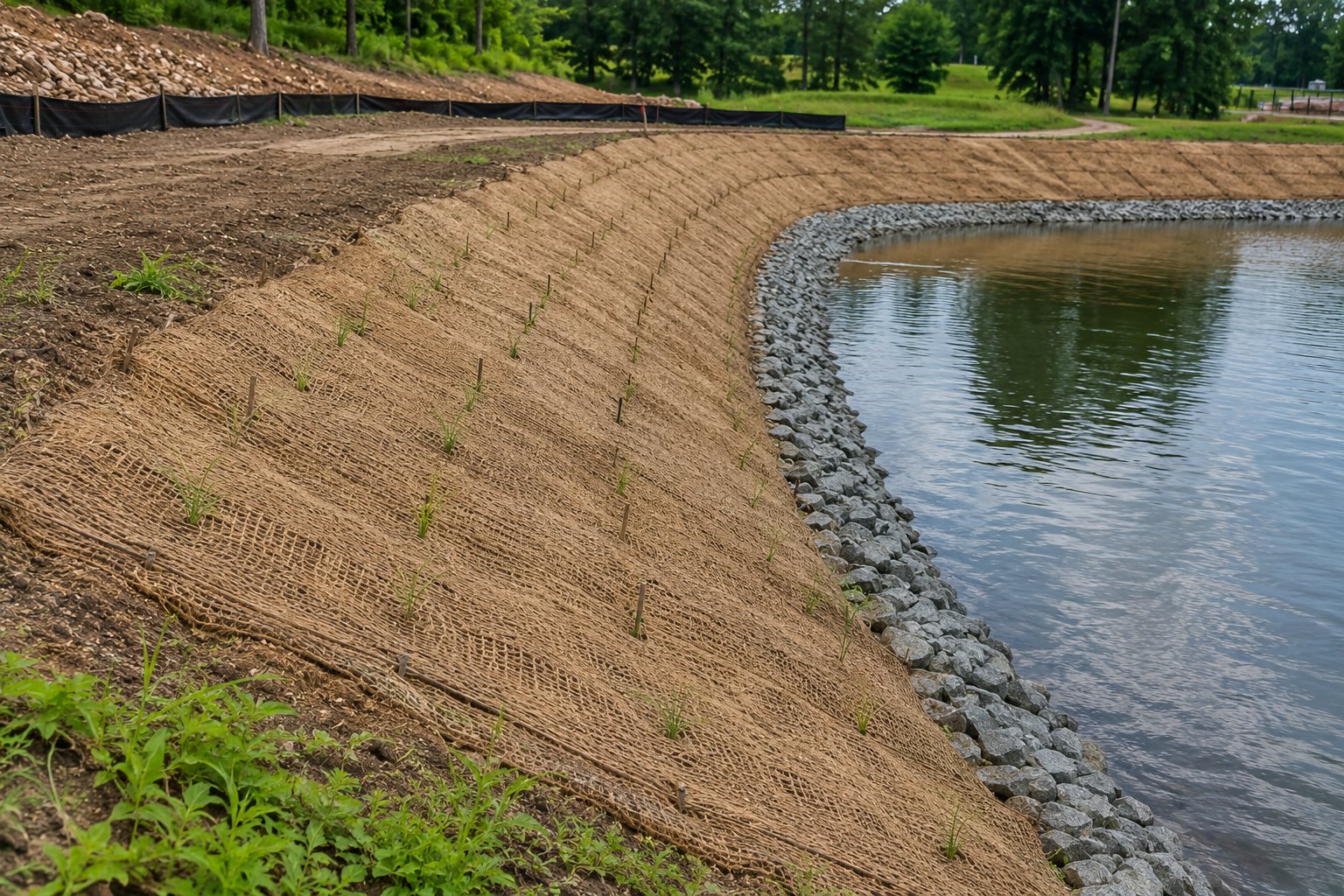
Biodegradable mat anchored over seeded ground on slopes or near water. Holds seed and soil through germination and the first rain events. Different weights and weave for different slope steepness and flow.
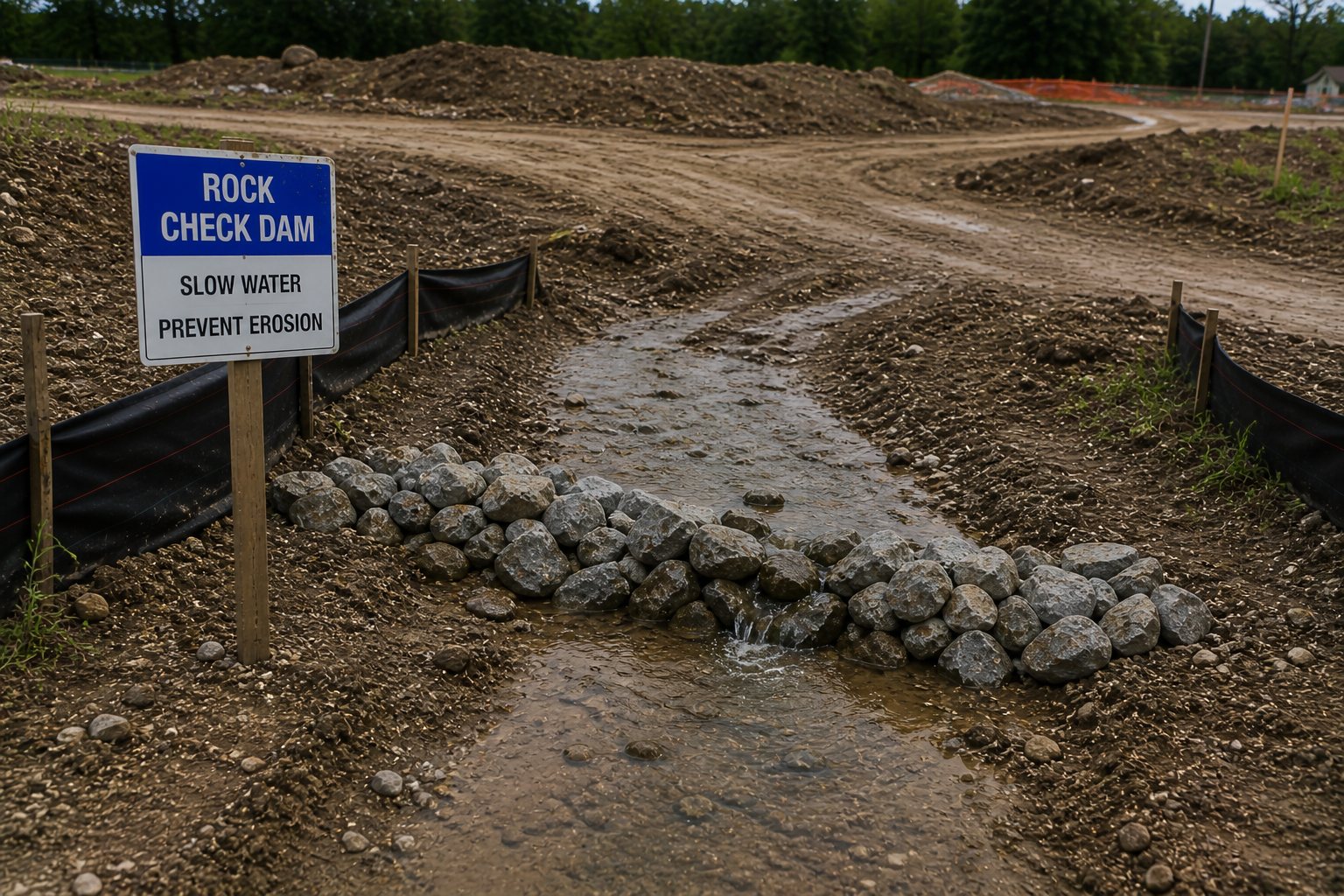
Riprap structure placed across a drainage ditch or swale to slow flow, reduce velocity, and let sediment settle out. Sized to the flow it has to handle — undersized check dams blow out in the first real storm.
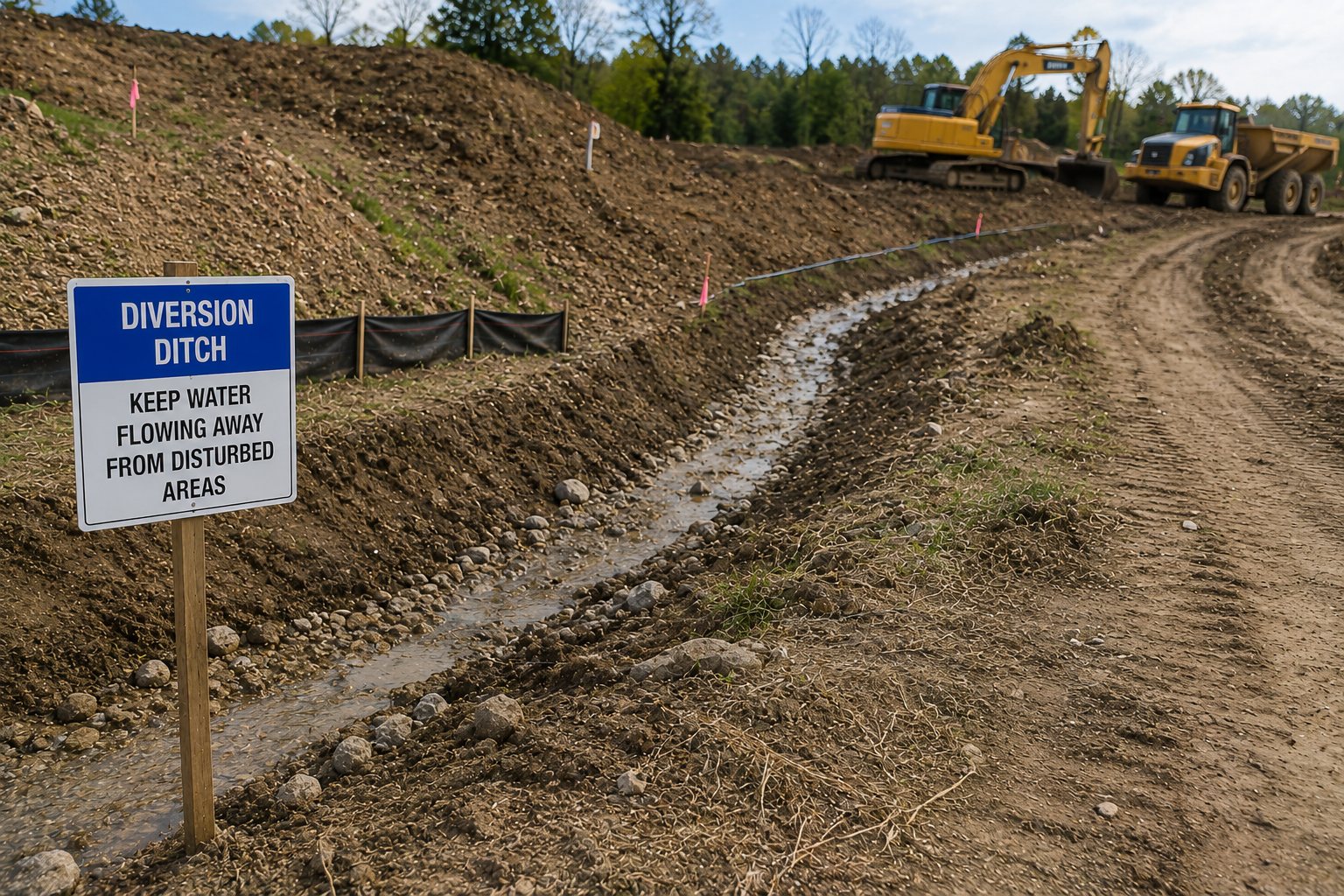
A graded channel that routes clean upstream water around the disturbed area, keeping it out of the active site. Reduces the volume of stormwater that has to be managed, treated, and discharged. Essential on sites with significant offsite drainage.
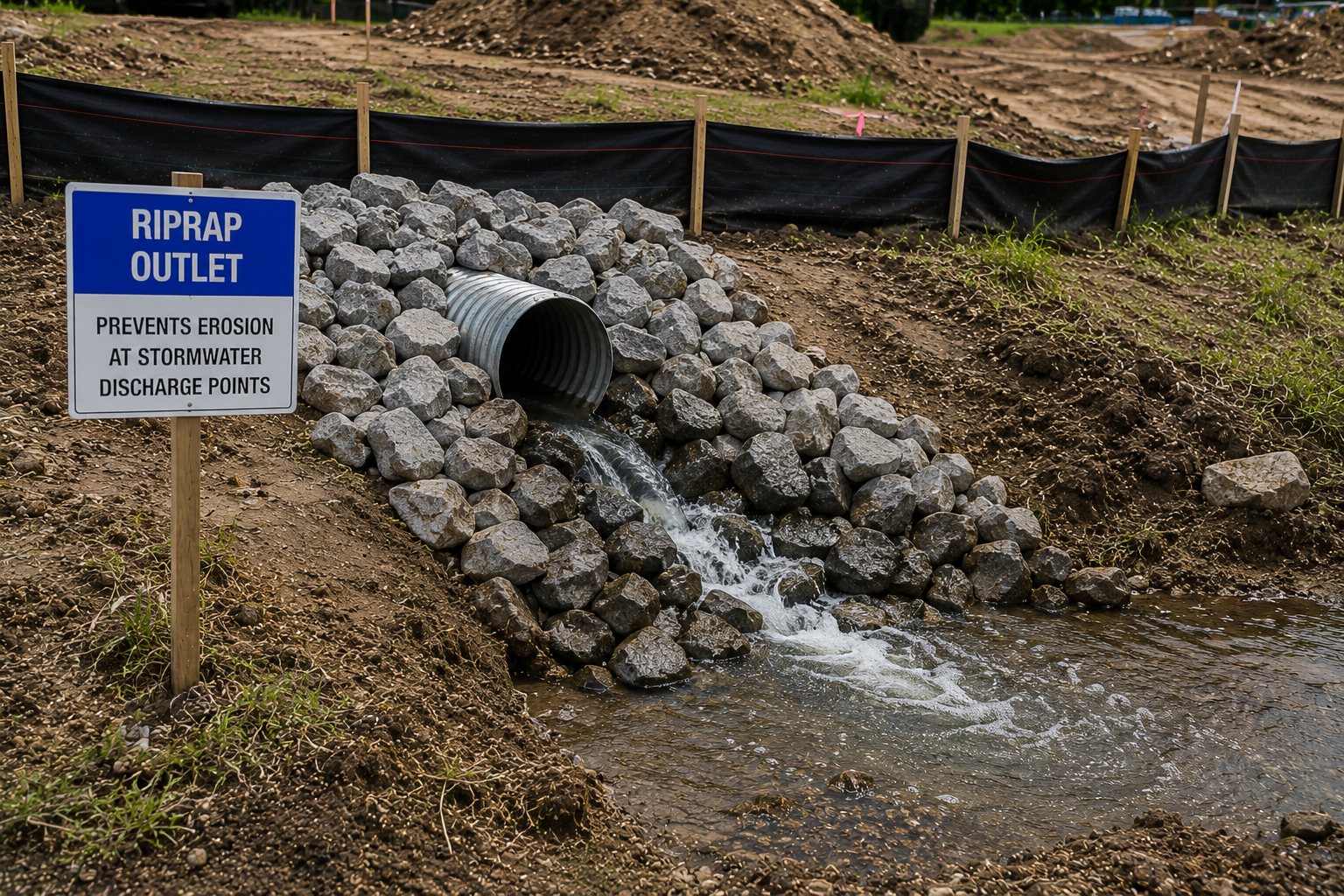
Energy-dissipation rock placed at a culvert or swale discharge point. Without one, concentrated flow scours the soil at the outlet and creates an expanding erosion channel. Sized correctly to the expected discharge velocity.
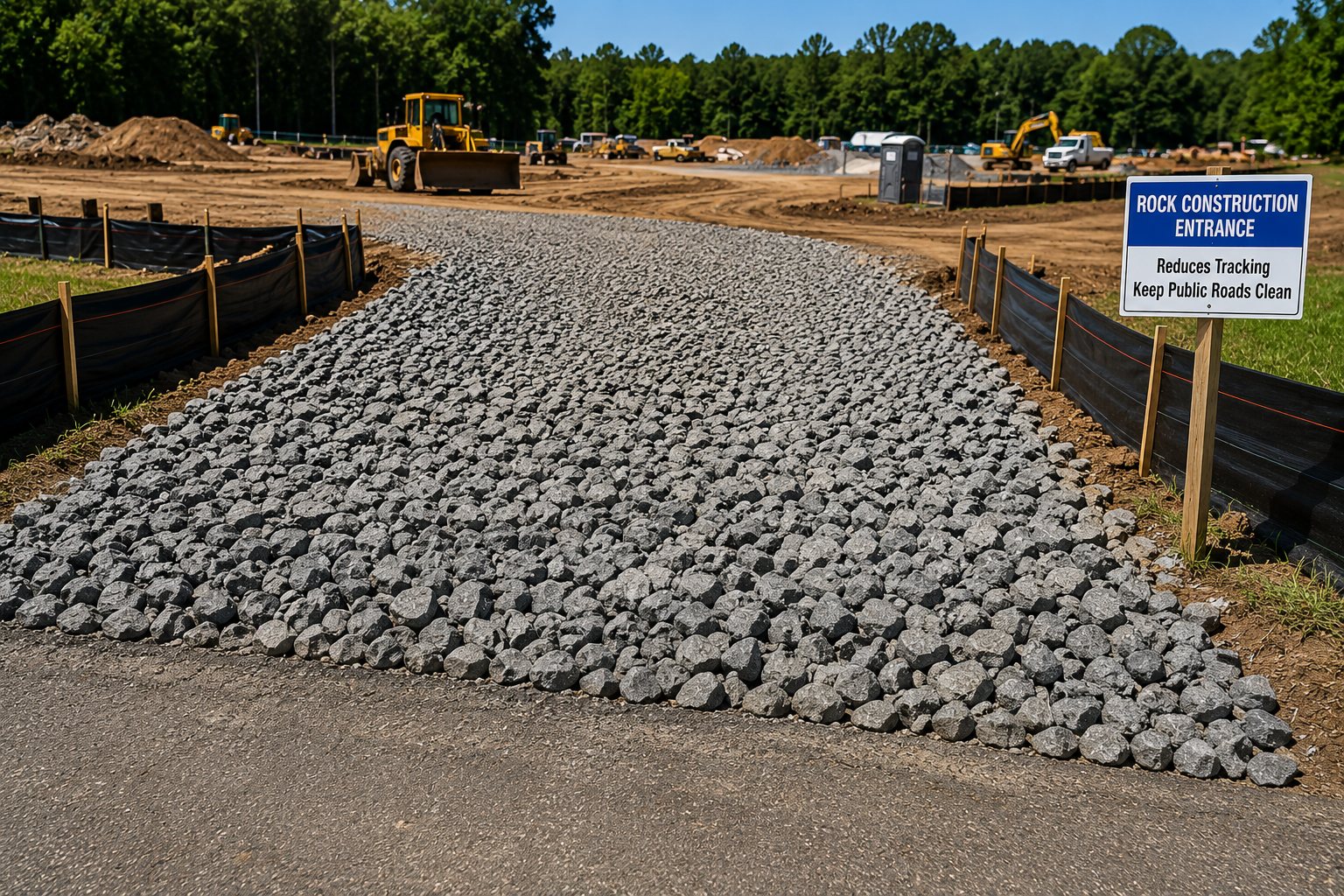
Rock pad at the site exit that knocks mud off tires before vehicles hit public roads. The most common cause of off-site track-out violations is an undersized or worn-out entrance pad. Replenished as it embeds into the ground.
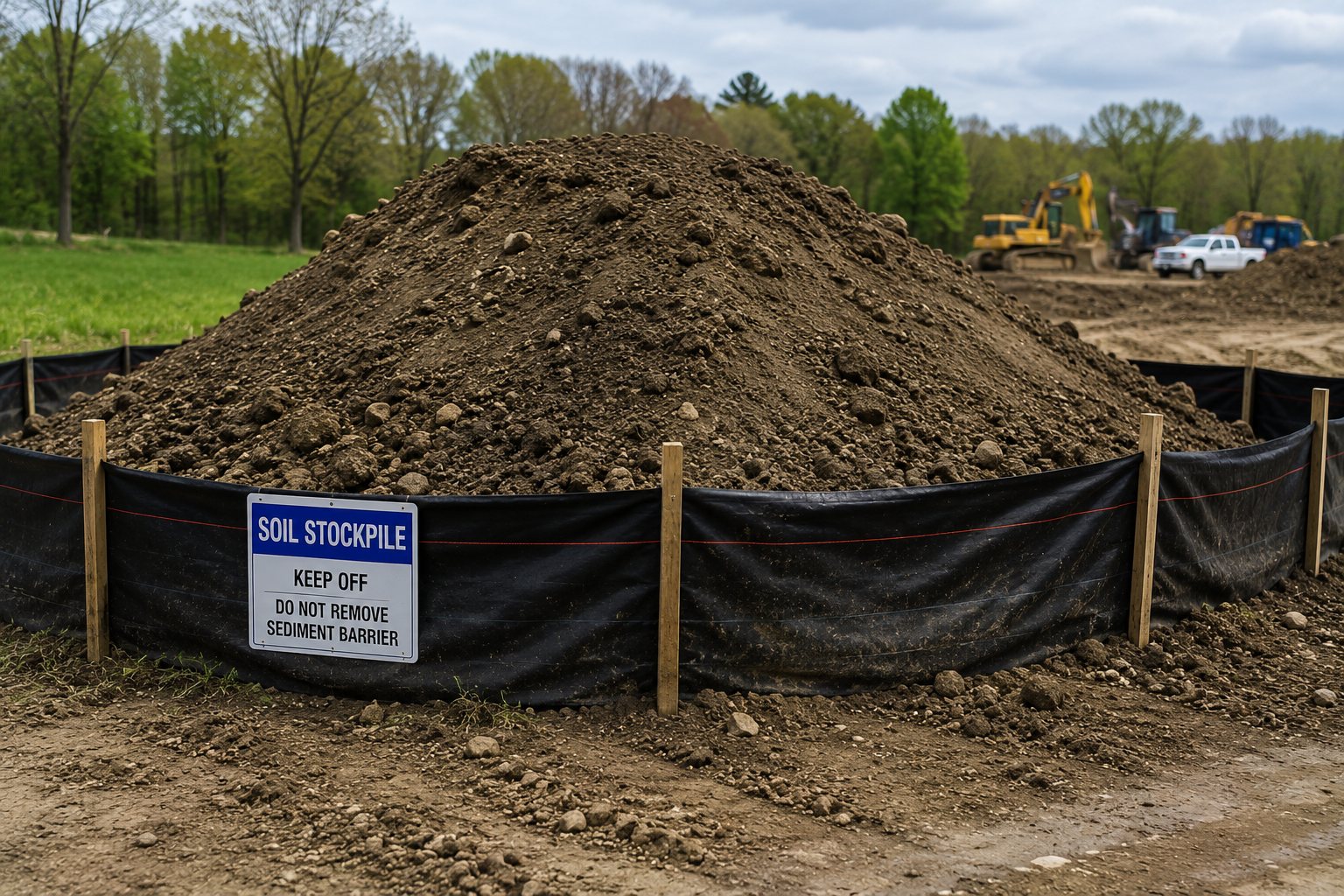
Stockpiles of excavated material set back from drainage paths and ringed with silt fence or wattles, then seeded or covered if they'll sit more than 14 days. An unprotected stockpile is one rainstorm away from being the biggest sediment source on the site.
The agencies below administer construction stormwater permitting in our service area, plus the EPA Region 7 office that oversees both states. Bookmark the ones that apply to where you build.
Administers Kansas's NPDES Construction Stormwater General Permit and statewide environmental compliance.
Administers Missouri's Land Disturbance General Permit (the state's NPDES construction stormwater permit) and statewide environmental compliance.
EPA Region 7 covers Kansas, Missouri, Iowa, and Nebraska. The Construction General Permit framework and national NPDES standards are documented here.
Many KC-metro municipalities have additional stormwater ordinances on top of state requirements. Check directly with the jurisdiction your project is in.
For BMP design specifics, sizing, and installation standards. These are the references engineers and inspectors typically cite.
If you have an active spill or release, the regulator wants to hear about it from you — not later, and not from someone else.
A short reference for the acronyms and terms that show up in SWPPP plans, permits, and regulator correspondence.
The Kansas Department of Health and Environment (KDHE) administers the NPDES Construction Stormwater General Permit under delegation from the EPA. Most construction sites disturbing one acre or more (or smaller sites that are part of a larger common plan of development) must obtain coverage and maintain a SWPPP.
Some local municipalities — Olathe, Overland Park, Lenexa, Shawnee, and others — have additional stormwater ordinances on top of KDHE requirements.
The Missouri Department of Natural Resources (MDNR) administers the Land Disturbance General Permit — Missouri's version of the NPDES Construction Stormwater permit. Coverage is required for most construction sites disturbing one acre or more.
The Kansas City metro spans both states, so projects near the state line may have to consider both KDHE and MDNR requirements depending on where the disturbance occurs.
Erosion control prevents soil from being detached in the first place — vegetation, mulch, erosion control blankets, slope stabilization, soil binders.
Sediment control captures soil that has already been detached and is moving with stormwater runoff — silt fence, sediment traps, check dams, inlet protection.
A good site uses both, with erosion control prioritized because it's cheaper and more effective. Sediment control is the safety net for what gets through.
Under the standard NPDES Construction General Permit framework, qualified personnel inspect the site at least once every seven calendar days, and within 24 hours of a qualifying rain event (typically 0.5 inch or greater — varies by permit).
Each inspection requires a documented report, photos, and any corrective actions identified and tracked through completion. Specific cadence varies by state and by permit — check your actual permit, not just the general rule.
If you're disturbing less than an acre and you're not part of a larger common plan of development, generally no. But "common plan" is broad — a phased subdivision, a multi-lot commercial pad, or a project being built in pieces all qualify, even if each phase is under an acre.
Local ordinances may also impose stormwater requirements on smaller sites. Always check with the jurisdiction first.
Educational reference is here for free. When you need it actually executed on a site — call.